What the percentage means
A tint percentage is its VLT, or visible light transmission: how much light gets through. 5% is the darkest (often called limo tint) and 70% is nearly clear. The lower the number, the darker the window.
Darker isn't always cooler
With old dyed tint, the only way to block more heat was to go darker. Ceramic film is different. XPEL Prime XR Plus uses nano-ceramic layers that block infrared heat, the heat you feel on your skin, even in light shades. Every shade from 5% to 55% blocks up to 96% of infrared heat, and even 70% blocks up to 92%.
XPEL Prime XR Plus by shade
| Shade | Look | Total solar energy rejected | Infrared rejected | Glare reduction |
|---|---|---|---|---|
| 5% | Limo dark | 71% | 96% | 95% |
| 15% | Very dark | 69% | 96% | 88% |
| 20% | Dark | 66% | 96% | 80% |
| 30% | Medium | 61% | 96% | 66% |
| 45% | Light | 58% | 96% | 51% |
| 70% | Nearly clear | 52% | 92% | 27% |
Figures from the XPEL Prime spec sheet (USA). Every shade blocks 99% of UV rays.
Which shades are legal in Florida?
Front side windows must let in at least 28% of light. Rear windows on cars must let in at least 15%, and on SUVs and trucks at least 6%. Factory glass adds a little darkness of its own, so we meter your glass before recommending a shade. Full details are in our Florida tint law guide.
Popular choices
- Clean factory look: 45% all around. It's noticeably darker than stock but still easy to see out of at night.
- More privacy in back: a lighter shade on the front doors with 20% on the rear windows of a car.
- Maximum heat rejection without darkness: 70% on the windshield and front windows. It's nearly invisible but still blocks up to 92% of infrared heat.
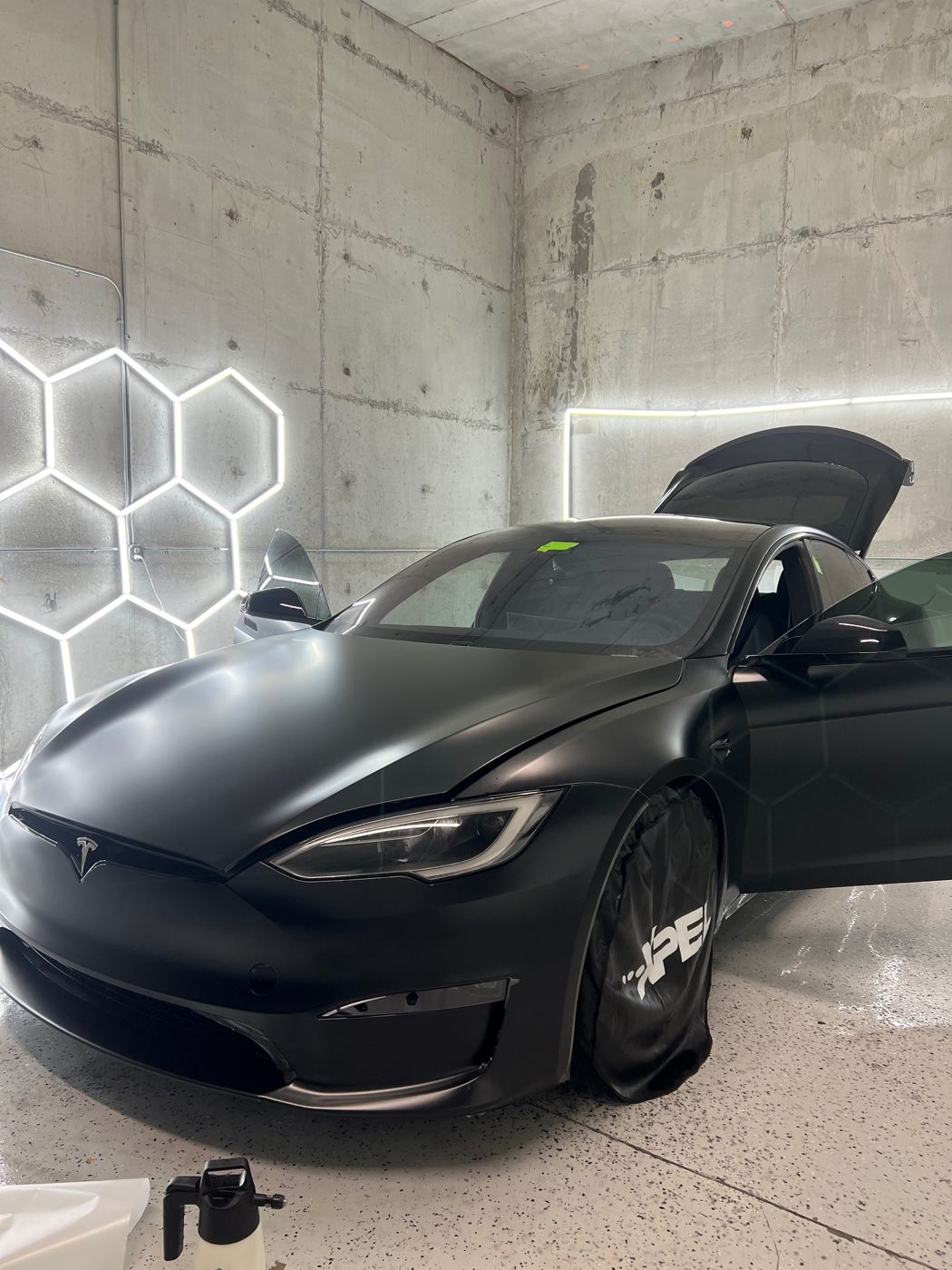
Want to see it on a car? Try the tint builder, or stop by the shop and we'll show you real samples.